On 15 May, Kevin Warsh will succeed Jerome Powell as Chair of the US Federal Reserve. The nomination of the US President’s candidate was far from straightforward.
Suspected of being a Trump puppet, Warsh had to overcome significant political opposition before reaching the top of the US central bank.
A new Chair with an ambiguous profile
It is difficult to define Kevin Warsh’s monetary profile. While serving on the Fed’s Board of Governors between 2006 and 2011, he supported a restrictive monetary policy aimed at containing inflation at all costs. This “hawk” now appears to have become a “dove”, favouring lower policy rates to support economic activity, in line with Donald Trump’s wishes.
At the same time, the new Fed Chair has criticised the central bank's massive purchases of US debt over the past few years. He wants to reduce Fed intervention in the bond market, which could push long-term interest rates higher.
An inflation shock to manage
Whatever Kevin Warsh’s deeper convictions may be, the economic situation will dictate his course of action. And the cyclical environment looks particularly difficult for the new Fed Chair to manage.
In April, US inflation jumped to 3.8%, compared with 3.3% in March and 2.4% at the start of the year.
Due to the surge in energy prices, up 17.9% year on year, US inflation is now at its highest level since May 2023. It has moved sharply away from the official 2% target, a level it has not reached for five years despite the reassuring tone of monetary authorities, which continue to claim that price increases remain under control.
A particularly divided Fed
In addition to the inflation overshoot, the new Fed Chair will have to manage deep divisions within the US central bank.
At the 29 April meeting, where the monetary status quo prevailed, three of the twelve members of the monetary committee did not approve the official statement, which they considered too accommodative on inflation.
These dissenting members are concerned about the Fed’s credibility and want a firmer message on the fight against rising prices.
At the opposite end of the spectrum, a senior financial official fully aligned with Donald Trump advocated cutting the policy rate to support economic activity.
Powell’s false departure reassures markets
The new Chair’s room for manoeuvre will be very limited in the coming months, especially as Jerome Powell has decided to remain at the Fed after 15 May as an ordinary governor.
This is the first time since 1948 that a Chair has decided to remain active within the Fed after the end of his mandate.
By doing so, Powell prevents a possible takeover of the Fed by Trump supporters. This guarantees an independent monetary policy, consistent with the objectives of price stability and full employment assigned to the Federal Reserve.
While this situation is likely to infuriate the occupant of the White House, it reassures investors. The US stock market is at its peak, the dollar is stable on foreign exchange markets, and the rise in interest rates remains contained in the bond market despite the inflation overshoot.
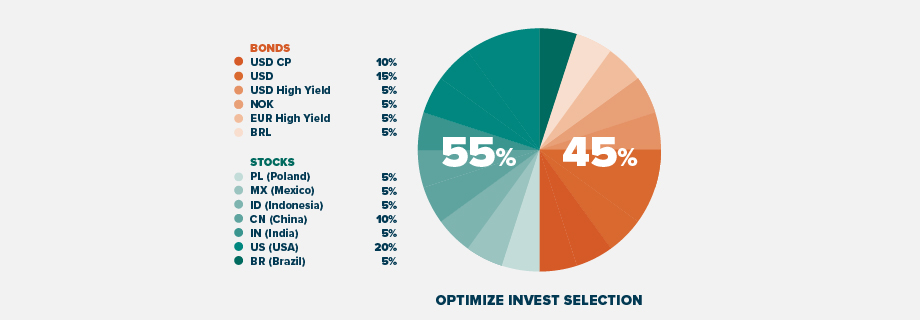
We are currently invested in U.S. bonds and stocks. See below our complete asset allocation strategy: