We must look at the causes of the Norwegian exception within a European continent walloped by the Ukrainian crisis.
The manna of hydrocarbons
The Norwegian economy is heavily producing hydrocarbons and is taking full advantage of the energy crisis. To replace Russian gas, Europeans naturally turned to Norwegian producers, already the second largest supplier to European countries before the war. With a jump of almost 10% since the beginning of the crisis and the collapse of Russian deliveries, Norway is now the most significant gas supply source on the old continent.
With the increased volumes delivered and the explosion in prices, Norway's hydrocarbon exports will reach 2200 billion crowns (about 220 billion €) against 832 billion last year. And this windfall will not dry up anytime soon, with exports estimated at NOK 2900 billion in 2023 and 2000 billion in 2024. In the longer term, too, Norway will benefit from the new energy reality on the old continent. The end of Russian gas is forcing European countries to find sustainable suppliers.
On November 29, a new contract was signed with Qatar. In 2026 and for 15 years, the Emirate will deliver up to 2 million tonnes of liquid gas annually to a gas terminal under construction in northern Germany. But Norway is also being courted by European countries. An investment of NOK 14.8 billion has recently been made to exploit a new deposit containing the consumption of nearly 2.4 million households over seven years.
Country's good governance
Limiting the excellent health of the Norwegian economy to gas is more than reductive. It is not enough to have a financial windfall from some raw material to be successful. We still have to know how to manage this money that fell from the sky.
Since 2002, all hydrocarbon annuities have been transferred to a sovereign wealth fund to avoid imbalances and to overheat the economy. Now endowed with $1,170 billion, more than twice the country's GDP, it invests only in companies, currently more than 9,000, and assets abroad. To preserve the capital, the Government can only draw on this fund to the extent of a fictitious annual return of 3%. This is a voluntarily reduced number, with the fund generating a higher average return since inception.
This Norwegian fiscal prudence applies even more today. While most European countries spend recklessly to support households and businesses facing soaring energy costs, Norway limits the increase in public spending. This is because the Government does not want to cause an overheating of the economy, which is already strongly stimulated by the boom in energy exports. He also wants to help the Central Bank in its fight against price slippage.
Favourable economic outlook
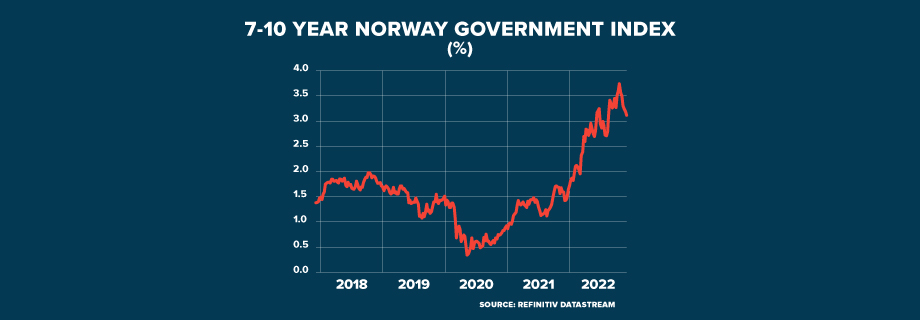
The monetary authorities have limited the rise in interest rates. The monetary authorities have determined the rise in interest rates. Since the year started, rent of money increased by only 2%, a slight adjustment similar to that of the European Central Bank and significantly lower than the action of the US Federal Reserve (+3.75%). This monetary moderation prevented the usual appreciation of the Norwegian krone when energy prices soared.
This has preserved non-energy sectors' international competitiveness in the Norwegian economy, such as fisheries, which, together with aquaculture, account for 5% of GDP and nearly 10% of exports. In addition, the moderate rise in interest rates also preserved domestic demand.
Economic activity, excluding the offshore energy sector, rose by 0.8% in the third quarter after a 1.2% jump in the second quarter.
With the energy boom, but also thanks to a situation of full employment (unemployment rate of only 3.2%), targeted budget support and relatively contained inflation (peak of 7.5% in October), which preserved household consumption, Norwegian GDP will increase by more than 3% this year.
Economic growth of around 2% is expected in 2023 and 2024. At the same time, the eurozone economy will be at a standstill next year before timidly raising its head the following year with a 1% increase in GDP.
A small but valuable diversification
Norway is prosperous thanks to hydrocarbons and sound management of this financial windfall.
Penalised by the low-key interest rate, the Norwegian krone did not experience the usual appreciation during a sharp rise in energy prices. Nevertheless, it is undervalued today against the euro and gives hope in the long term for a gain in the exchange rate.
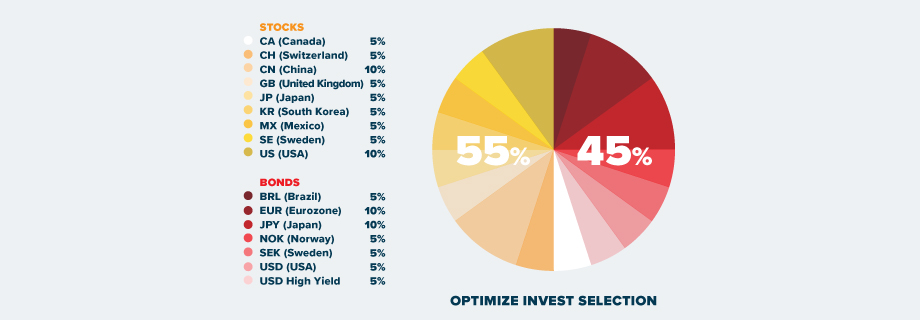
Norwegian krone bonds offer interest rates of around 3% and attractive negligible diversification. Buy 5% Norwegian Krone bonds as part of a defensive or neutral portfolio.