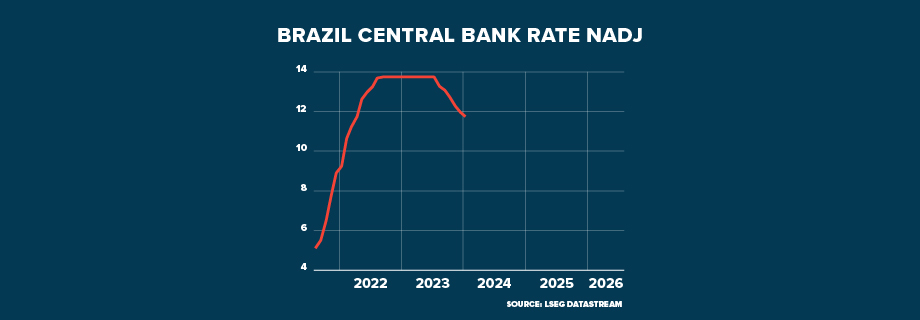
For the fourth time this year, the Central Bank of Brazil has lowered its benchmark interest rate. This reinforces our conviction that a new economic growth cycle is beginning to emerge.
As household demand gradually recovers and business investment remains resilient, Brazil's economy appears well positioned to strengthen over the coming months. For this reason, we continue to maintain exposure to Brazil within our neutral and dynamic investment portfolios.
A Credible and Disciplined Central Bank
The Central Bank of Brazil has built its reputation on credibility and policy discipline. When inflation climbed to 5.5% in 2025, policymakers responded decisively by raising the benchmark interest rate to 15%.
High borrowing costs inevitably weighed on economic activity. Expensive credit reduced household spending and discouraged companies from making new investments. The policy also attracted significant criticism, including from President Lula. Nevertheless, the central bank remained committed to its primary objective: restoring price stability while demonstrating its institutional independence.
Today, with inflationary pressures gradually easing, policymakers have greater room to support economic activity. Since the beginning of the year, the bank has implemented four consecutive 25-basis-point rate cuts. While further reductions will depend on the path of inflation, current indicators remain encouraging.
The Brazilian real has also provided important support. Since the start of the year, the currency has appreciated by 10% against the euro, helping reduce import costs and easing inflationary pressures. At the same time, relatively moderate domestic demand lowers the risk of inflation rebounding too quickly.
A New Growth Cycle for Investors
Against this backdrop, we believe inflation is likely to continue moderating, allowing the Central Bank of Brazil to gradually reduce interest rates further. More accommodative monetary policy should improve financing conditions, stimulate consumer spending, encourage corporate investment, and strengthen overall economic momentum.
Brazil also benefits from compelling long-term structural advantages. The country has established itself as a major exporter of hydrocarbons while possessing abundant reserves of rare earth minerals, two strategically important sectors in today's global economy. Combined with its large domestic market and improving macroeconomic environment, these strengths reinforce Brazil's long-term investment appeal.
Taken together, declining inflation, monetary easing, a stronger currency, and solid economic fundamentals suggest that Brazil may be entering the next phase of its economic cycle. In our view, these conditions create an attractive investment opportunity that investors should not overlook.
Investment Solution
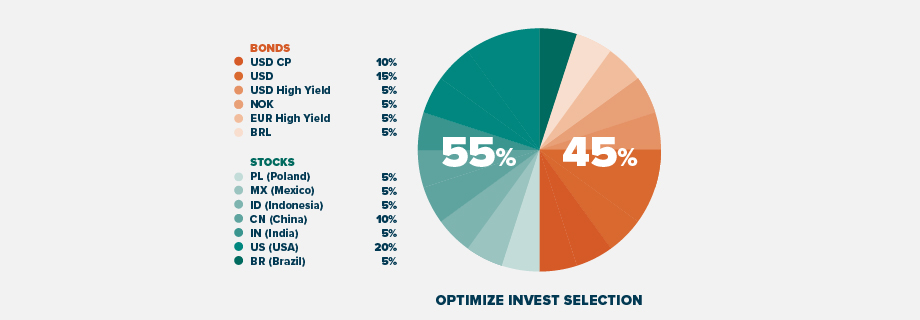
While Brazil is one of our preferred opportunities within emerging markets, investors may also consider diversified emerging market strategies. The Optimize Invest Selection provides exposure to Brazil alongside other high-quality emerging economies, helping diversify country-specific risks.