The US Federal Reserve (Fed) left its benchmark interest rate unchanged on July 29, as widely expected. However, unlike previous summer meetings—where the outcome was often considered a foregone conclusion—this year's decision carried significantly more uncertainty. For investors, the Fed has become much harder to predict, raising important questions about the outlook for financial markets.
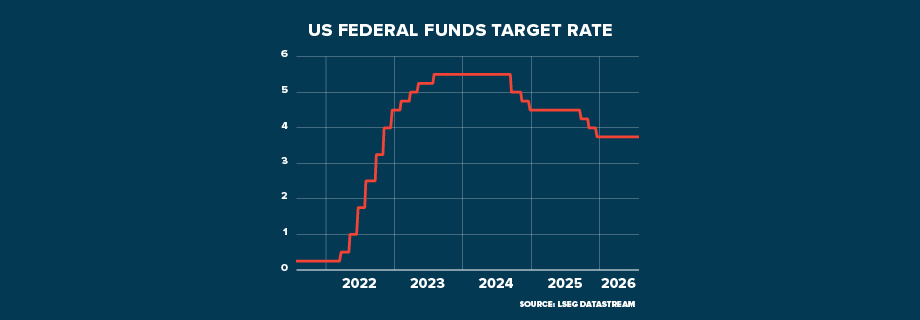
As shown in the chart below, the Fed has maintained a relatively restrictive policy stance. The real uncertainty now is no longer the current level of interest rates—but how future decisions will be communicated and implemented.
A New Fed Chair's Communication Strategy
One of the main reasons behind this increased uncertainty is the leadership style of the new Fed Chair, Kevin Warsh.
Warsh believes the Federal Reserve has become too transparent and wants the central bank to stop signaling its future policy decisions well in advance. As a result, he declined to participate in the Fed's June quarterly survey, in which policymakers typically share their expectations for future interest rate movements.
Under his leadership, official post-meeting statements have also become considerably shorter and less detailed. His public comments are intentionally more cautious and ambiguous, making it increasingly difficult for investors and economists to anticipate the Fed's next move.
A Deeply Divided Federal Reserve
The Federal Reserve has also become less predictable because of growing divisions within its Board of Governors.
Some policymakers remain concerned that inflation could accelerate again and argue that interest rates should be raised further. Others believe inflation risks are easing and see no need to tighten monetary policy.
This disagreement was evident during the July 29 meeting. The decision to keep interest rates unchanged was approved by only nine voting members, while three dissented, advocating for an immediate rate hike. Such an unusually divided vote highlights the uncertainty surrounding future Fed decisions.
Inflation Risks Remain Highly Uncertain
Forecasting US monetary policy has become even more challenging because the economic environment remains highly volatile.
The renewed conflict in the Middle East quickly pushed oil prices higher, reviving concerns that inflationary pressures could return.
Only two weeks earlier, when a ceasefire appeared to be holding and energy prices were falling sharply, financial markets assigned almost no probability to a July rate increase. By July 24, however, as geopolitical tensions once again threatened global oil supplies, market expectations for a rate hike had surged to around 40%.
This rapid shift illustrates how geopolitical events can quickly reshape expectations for inflation and monetary policy.
What Does This Mean for Investors?
Greater Short-Term Market Volatility
A less predictable Federal Reserve mainly affects investors over the short term.
As expectations for interest rates fluctuate, financial markets can react sharply. The US dollar, Treasury bonds, and US equities may all experience significant short-term price swings.
While this creates additional trading and speculative opportunities, it also increases the risk of unexpected market disappointments.
Long-Term Investment Strategy Remains Unchanged
For long-term investors, however, the implications are far less significant.
A diversified investment strategy should not be driven by attempts to predict the Federal Reserve's next meeting.
Over time, the value of the US dollar is primarily determined by economic fundamentals rather than by monetary policy over the next few months. Likewise, the long-term performance of US equities depends far more on corporate earnings growth, innovation, and economic expansion than on short-term interest rate decisions.
US dollar-denominated bonds also continue to offer attractive yields and remain an effective tool for reducing overall portfolio risk, regardless of whether the Federal Reserve raises, cuts, or maintains interest rates at its next meeting.
Key Takeaway
The Federal Reserve has entered a new era of less predictable monetary policy. Changes in communication, internal disagreements among policymakers, and heightened geopolitical uncertainty have made forecasting interest rate decisions increasingly difficult.
For active traders, this environment is likely to create greater short-term volatility and more speculative opportunities. For long-term investors, however, the fundamentals remain unchanged: maintaining a diversified portfolio focused on long-term economic growth continues to be a more robust strategy than attempting to anticipate every move made by the Federal Reserve.
Putting the Strategy into Practice
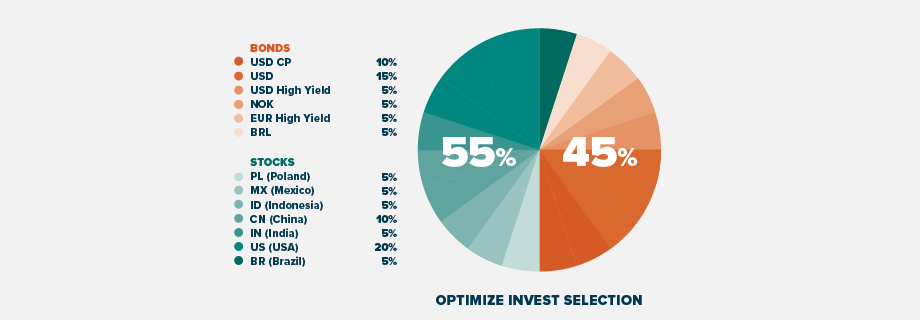
The long-term investment approach discussed throughout this article can be implemented through diversified investment funds that combine exposure to different asset classes and markets. Optimize Invest Selection is an example of a fund designed with this philosophy in mind.