Saving money is an essential financial habit, but in today's economic environment, saving alone is no longer enough. Across Europe, households continue to save a significant share of their income, although less than they did in recent years. Rising living costs and persistent inflation are gradually reducing savings rates, making long-term investing increasingly important to preserve purchasing power and build wealth.
Our Perspective
European households still hold substantial savings, but the trend is changing. Keeping large amounts of cash in low-interest current or savings accounts may feel safe, yet it often fails to keep pace with inflation over time.
A more effective approach is to invest regularly, diversify across different asset classes, and adopt a long-term investment strategy. This helps reduce risk while giving your capital the opportunity to grow steadily over time.
Europeans Continue to Save—But Less Than Before
Although Europeans are still saving more than they did before the COVID-19 pandemic, savings rates have started to decline. As the cost of living increases, many households are using a larger portion of their income to cover everyday expenses, leaving less money available for savings.
During the first quarter of the year, the average household saving rate in the European Union remained around 14.3% of disposable income, compared with approximately 13% before the pandemic. This remains significantly higher than in the United States, where the household saving rate is typically around 3%.
These figures show that Europeans remain strong savers, but many are gradually relying more on their financial reserves.
Why Saving Alone Is No Longer Enough
Germany provides an interesting example of why high savings do not automatically lead to greater wealth.
German households save nearly 19% of their income, one of the highest rates in Europe. However, studies on median wealth per adult indicate that the average German household owns less wealth than households in countries such as Belgium, France, Italy, Spain, Portugal, and Greece.
Two main factors explain this apparent contradiction:
Low homeownership rates. Fewer than half of German households own their primary residence, making Germany an exception within the European Union.
Conservative savings habits. A significant proportion of savings remains in highly liquid, low-risk bank accounts that generate limited returns and often fail to outpace inflation.
As a result, households that primarily save cash may accumulate less wealth over time than those who invest in real estate or diversified financial portfolios.
Why Investing Your Money Matters
Building an emergency fund remains one of the foundations of sound personal finance. Every household should maintain sufficient cash reserves to cover unexpected expenses and short-term financial goals.
However, once that safety cushion is established, excess cash should ideally be put to work through investments that have the potential to generate long-term returns.
Rather than leaving substantial balances in low-yield accounts, investors can consider building diversified portfolios that align with their financial objectives and risk tolerance.
The Benefits of Long-Term Investing
Consistent investing offers several long-term advantages:
Protects purchasing power against inflation.
Allows capital to benefit from compound growth.
Diversifies risk across different investments.
Helps build long-term wealth.
Supports important financial goals such as retirement planning, children's education, or purchasing a home.
Even modest, regular investments can make a meaningful difference over time when combined with discipline and a long-term perspective.
Key Takeaway
Saving money is the first step toward financial security—but investing is what allows wealth to grow.
By maintaining an emergency fund while investing surplus savings through a diversified, long-term strategy, individuals can better protect their purchasing power and increase their chances of achieving lasting financial success.
In short, saving is essential. Making your savings work for you is even more important.
For investors looking to make their savings work over the long term, a diversified fund such as Optimize Invest Selection can provide exposure to different assets while supporting a balanced investment approach.
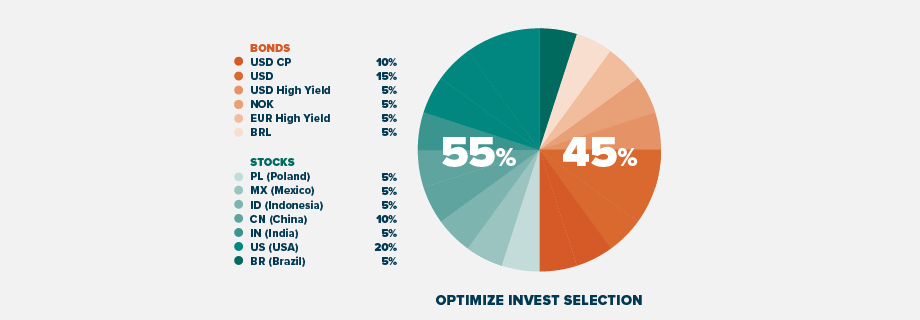
The fund characteristics, terms and conditions, and the factsheet are available at https://optimize.pt/en/investment-funds/invest-selection/.