China's economy expanded by 4.3% in the second quarter of 2026, its slowest growth since the pandemic and below Beijing's official target. The weaker-than-expected GDP figures have renewed concerns about the country's economic outlook and prompted many investors to ask a simple question:
Is it time to reduce exposure to China?
Our view is no. While China's economic model is evolving, the country's long-term investment case remains intact.
Why is China's economy slowing?
China's economic slowdown is primarily the result of two structural shocks: the property market correction and the lasting effects of the COVID-19 pandemic.
The restructuring of the real estate sector redirected capital away from property development toward higher-value industries such as technology and research. Although this transition should improve long-term productivity, it has also weakened household confidence as property prices continue to decline.
At the same time, Chinese households received far less fiscal support during the pandemic than consumers in most Western economies. Many families relied on their own savings during prolonged lockdowns and have remained cautious ever since.
As a result, consumer spending remains subdued, limiting the recovery of domestic demand. Retail sales, private investment, and automobile sales all continue to reflect this cautious environment.
China's exports remain a major strength
While domestic consumption has softened, China's export sector continues to demonstrate remarkable resilience.
Years of heavy investment in innovation have transformed China from a low-cost manufacturing hub into a global leader in advanced industries. Today, Chinese companies are highly competitive in electric vehicles, renewable energy, batteries, drones, artificial intelligence, and other high-tech sectors.
This technological leadership has translated into record trade surpluses and strong export growth, reinforcing China's importance within global supply chains.
Will trade tensions threaten China's growth?
Growing Chinese competitiveness has increased trade tensions, particularly with Europe. Calls for tariffs and other protectionist measures have become more frequent as European manufacturers struggle to compete with lower-cost Chinese products.
However, a full-scale trade conflict would likely damage both economies.
European industries remain deeply dependent on Chinese supply chains, while China still relies on international markets to support economic growth. Both sides therefore have strong incentives to preserve commercial relations despite political disagreements.
Meanwhile, Beijing is actively reducing its dependence on exports by expanding trade with emerging markets and encouraging stronger domestic consumption.
What does this mean for investors?
China no longer aims to recreate the double-digit growth rates of previous decades. Instead, policymakers are focused on improving the quality and sustainability of economic growth.
Additional fiscal stimulus, infrastructure spending, lower interest rates, and further monetary easing remain likely over the coming quarters as authorities seek to support domestic demand.
For investors, this creates opportunities across multiple asset classes.
Chinese government bonds continue to offer valuable diversification benefits within defensive portfolios, particularly in an environment of accommodative monetary policy.
Chinese equities, meanwhile, have underperformed during the first half of 2026, leaving valuations significantly more attractive than in recent years. If policy support strengthens and consumer confidence gradually improves, the Chinese stock market could offer meaningful recovery potential.

Should investors invest in China in 2026?
Despite near-term economic challenges, we believe the answer is yes.
China faces structural headwinds, but it also possesses significant competitive advantages in advanced manufacturing, technology, and global trade. The government has substantial policy tools available to support growth and appears committed to rebalancing the economy toward a more sustainable model.
For long-term investors, China's current weakness should be viewed less as a reason to exit the market and more as a period of transition that may create attractive investment opportunities.
An investment solution to consider
Against this backdrop, investors seeking diversified exposure to Chinese assets may consider investment solutions that aim to capture long-term opportunities while maintaining a disciplined approach to portfolio risk management.
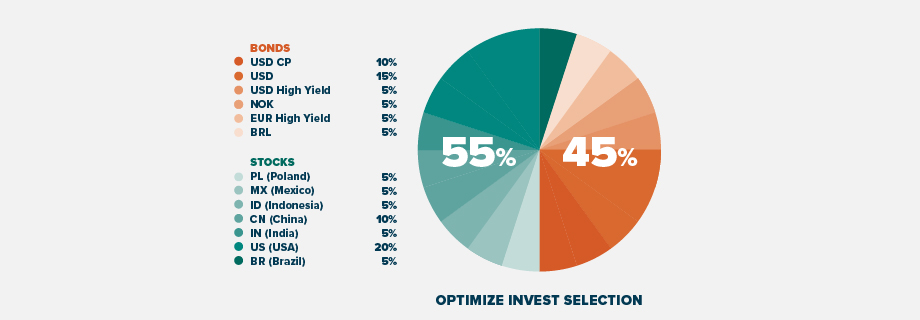
The Optimize Invest Selection offers exposure to this investment theme, providing a structured approach for investors looking to participate in China's long-term economic transformation while navigating short-term market volatility.